 This week, GitHub updated its latest transparency report with the latest data, revealing the total number of notices received and projects affected. The report shows that the platform processed a little over 2,000 takedown notices in 2023, which affected 20,517 repositories.
Of all notices received, just 35 were contested or retracted, and a total of 65 repositories remained online as a result.
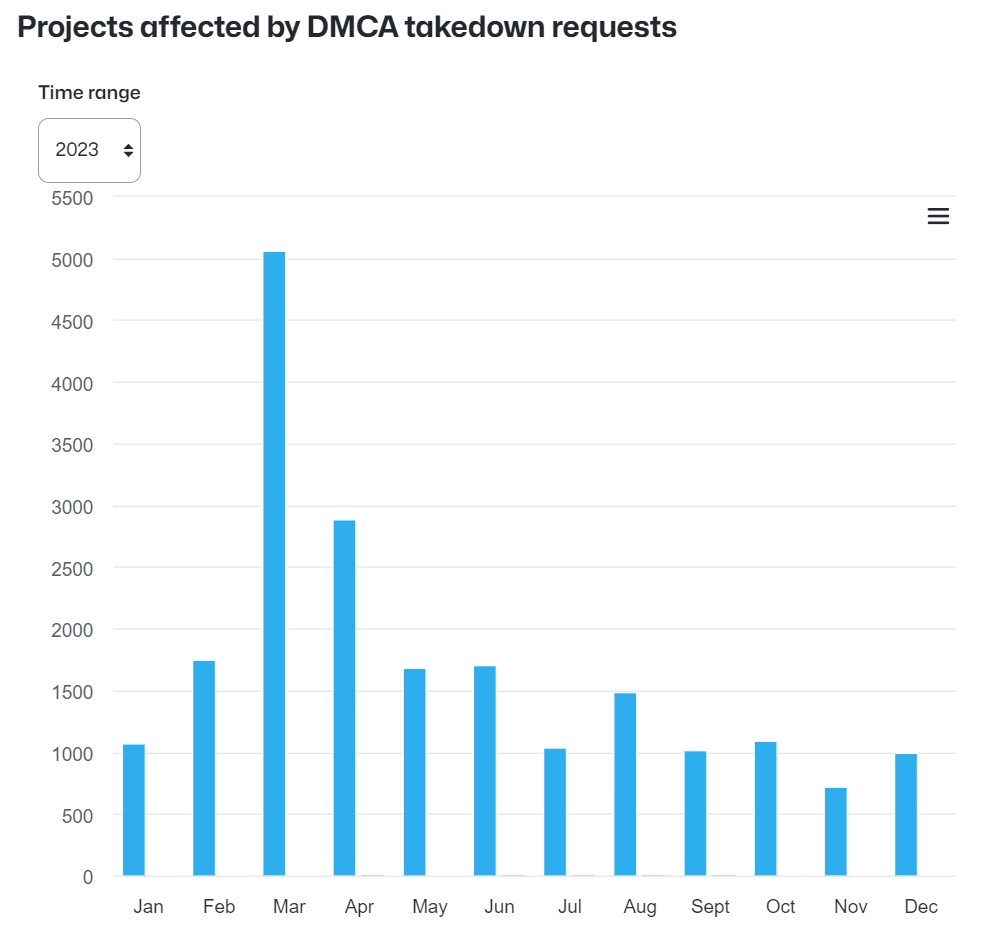
As seen above, most repositories were taken down in March. After looking at the reported notices we couldn’t immediately find one responsible for this large uptick, but with many hundreds of “Eaglercraft” repositories flagged by Minecraft’s parent company Mojang, that certainly left a mark.
GitHub says that it will continue to take a developer-first, approach to content moderation, minimizing the disruption of software projects while protecting developer privacy. These transparency reports and the publicly posted takedown notices are a means to that end.
The transparency report also shines light on how takedown activity evolves as the platform grows. This historical data shows that, in relative terms, the number of repositories on GitHub grows faster than the takedowns.
For example, Github hosted just under 40 million repositories in 2015, of which 8,268 were taken offline. Today, the platform has more than ten times as many repositories, yet takedowns failed to triple in the same period. In fact, the number of takedowns in 2023 is lower than a year earlier.
Surge in Circumvention Notices Explained
Last year, GitHub did report a notable uptick in DMCA circumvention claims. These more than quadrupled compared to the years before and this wasn’t just a fluke, as the most recent transparency report shows.
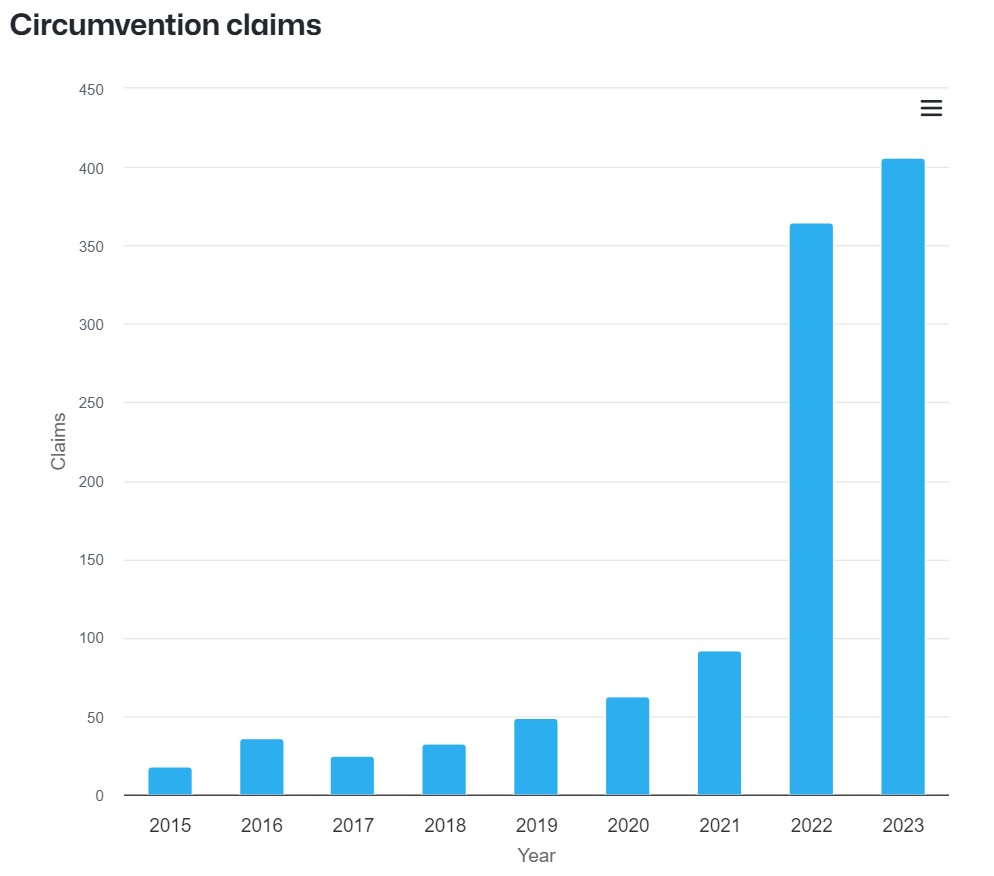
At least initially, the reasons for this were unclear, prompting GitHub to launch an investigation. The results of this exploration, released this week, show that the explanation is quite straightforward.
In the fall of 2021, GitHub updated its DMCA takedown submission form with questions explicitly related to circumvention. Providing that option triggered many more submitters to tick that box, raising the number of ‘circumvention’ claims.
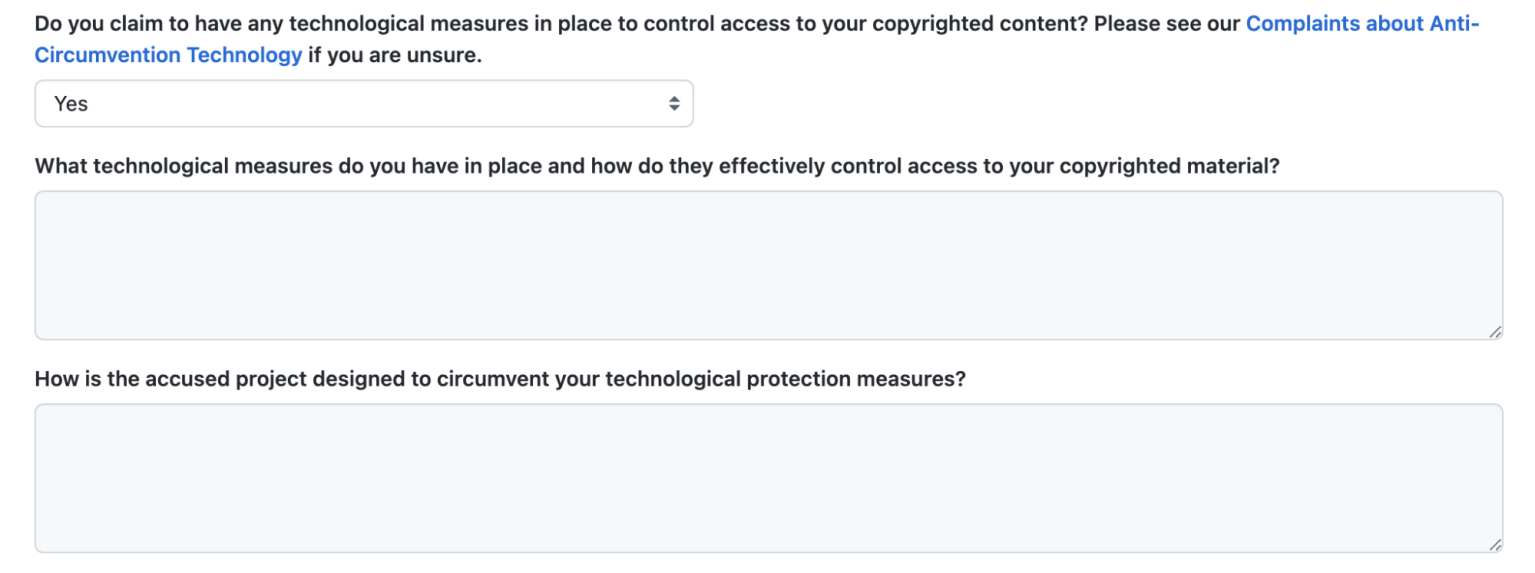
These additional circumvention ‘claims’ don’t necessarily mean that more notices were processed for this reason. According to GitHub, many of these notices were processed for other reasons instead, including as regular takedown notices.
“[W]hile significantly more notices we process allege circumvention, the rate at which we process takedown notices because of circumvention hasn’t accelerated,” GitHub writes.
Processing circumvention notices is quite costly for the company as all requests are reviewed by a team of lawyers and engineers, to ensure that developers’ projects are not taken down without valid reasons.
This extra scrutiny was first brought to the fore during the youtube-dl takedown saga, after which GitHub launched a million dollar Developer Defense Fund.
GitHub is now actively engaged in policymaking in this area. The company previously urged the US Copyright Office to expand the DMCA anti-circumvention exemptions to benefit developers, while eliminating FUD.
All in all, it’s good to see that GitHub remains committed to takedown transparency, and we will keep monitoring these and other trends going forward.