 Earlier this month, French President Emmanuel Macron and South Korean President Lee Jae Myung hosted a one-day gathering of studio bosses, ministers and filmmakers in the south of France.
This Lumière Summit closed with the signing of several thematic declarations, including one on international cooperation against piracy.
Representing Hollywood, Motion Picture Association (MPA) CEO Charles Rivkin was scheduled to give a keynote before a session on “the race against piracy,” but was held up in a presidential meeting. While MPA’s EMEA president Emilie Anthonis filled in briefly, the tone was already set by a minister, who put the piracy talk in perspective.
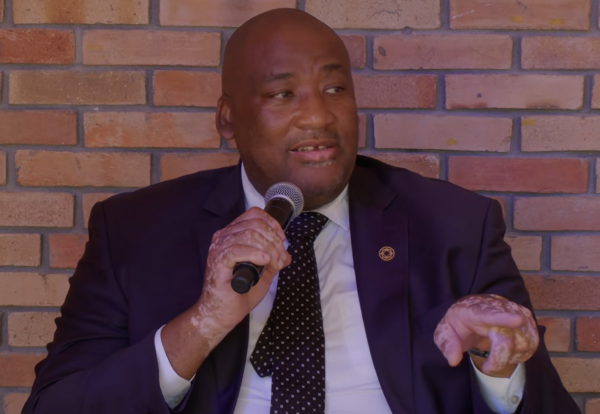
Gayton McKenzie, South Africa’s Minister of Sport, Arts and Culture, shared the stage with the chair of French regulator ARCOM and a deputy director general of WIPO, who outlined their anti-piracy track records.
As a representative of the South African government, McKenzie said he agreed that piracy is bad. However, he took issue with almost everything else.
“We need to define what is piracy,” he said. “There’s a failure by the people tasked to fight piracy not to define it definitively,” the minister added, before going into more detail on an alleged double standard.
His first example came from the same summit. That morning, McKenzie said, a filmmaker had told the audience that his film was banned in Egypt but that people could still see it there thanks to piracy.
The filmmaker said he was glad people could see it “and then people clapped,” McKenzie said.
He gave a second example, a Canadian production about a gay hockey player, apparently the series Heated Rivalry, which he said is now being pirated in the countries where it is banned, to add that “everybody in the industry is clapping.”
From personal history the minister also recalled that, during South Africa’s apartheid regime, several films were not allowed to be distributed, leaving piracy as the only option.
When dealing with this type of banned content and censorship, piracy is put in a different light, apparently with filmmakers praising it. However, when poor people pirate, they face legal issues, McKenzie said. He called the industry’s approach “a bit schizophrenic” with “dual standards.”
‘Egyptians Love Piracy’
The filmmaker that McKenzie referred to was Tarik Saleh, the Swedish-Egyptian director of The Nile Hilton Incident and Cairo Conspiracy. These movies are set in Cairo, but they are banned in Egypt.
At the opening session of the summit, Saleh said he was told to leave the country before shooting his first film.
“I was going to shoot my first film in Egypt and I was asked to leave. Uh, I’m putting it nicely. I mean, they said, ‘Get the f*ck out of here,'” he said, after which he chose to make the films in Morocco.

Saleh added that Egyptians can still see his films thanks to piracy, which he doesn’t mind.
“[H]ere is where piracy come into the picture in a little reversed way. Egyptians love piracy, which is working very well for me,” he said with a laugh.
There was no applause though. Instead, the moderator jumped in noting that the regulators on the afternoon’s piracy panel could be asked about it. Nobody asked them. McKenzie is the one who brought it up.
‘We’re Not Children’
McKenzie’s second point was addressed to the people sitting next to him. ARCOM chair Martin Ajdari just said they issued more than 22,000 blocking and delisting injunctions in five years, with 10,000 alone in 2026, while the piracy audience was slashed in half since 2018.
McKenzie said that was impressive, but he stressed that successes in one country are less effective if other countries do little to nothing. He compared it to two people in a boat that is leaking on only one side.
“We on the same boat. We both hate piracy,” he said. “The boat is leaking on our side and you are praising, like, where we are sitting we’ve done this.”

The minister also criticized that developing countries are being pressured into compliance. This came after WIPO’s Sylvie Forbin listed some of the conditions that came with WTO membership in the 1990s. This appeared to strike a nerve with McKenzie, who pushed back.
“Don’t try to punish us like we are children, because we are not children,” he said, not directly aiming at his fellow panelist.
South Africa has more recent experience with that kind of pressure. In 2020, U.S. copyright groups asked Washington to review the country’s trade preferences over the fair use provisions in its copyright bill, which they considered too broad.
‘We Are Not Beggars’
Toward the end of the session, McKenzie stressed that his position has nothing to do with money. South Africa is not short on funds to pay for anti-piracy efforts. It could pay as much as Sweden or the UK, but it mostly wants to be taken seriously.
“We don’t lack the money. There are countries that lack the money,” McKenzie said. “But we don’t want to be treated like, here’s money for you, do one, two, three. We want you also to listen to our ideas.”
“We are not beggars,” he added. “We want a partnership of equals.”
McKenzie said his government is already in touch with Canal+ about football piracy and that anti-piracy warnings now run before every match in South Africa. South Africa wants to help address piracy, as long as it is treated as a serious partner.
The Lumière Summit closed with a formal declaration to strengthen international anti-piracy cooperation.
This voluntary agreement does not include any hard commitments, and for now it has not been signed by any South African representative either.
—
The videos for all the sessions are available through the summit website. The quotes used in this article were transcribed by TorrentFreak from these recordings.